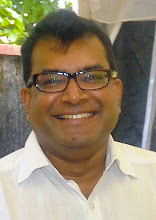
some observations that came to mind in no particular order of significance
The decision was to attempt to live in a village outside of my existing comfort zone
1 The village was not the romantic serene idyllic place of my imagination
2 Much of the poverty I observe is self inflicted and based on ritual of expectations
3 There is no such thing as “my word can be relied upon for anything”
4 Level of illness, hypochondria and downtime is of gargantuan proportions
5 People are two faced, saying one thing and behaving quite the opposite
6 When it comes to an almsgiving you can expect unlimited help
7 No one ever says they cannot come, especially when you invite them for a meal
8 People are very contradictory often denying what they have earlier said
9 I have never been invited for so many meals at short notice in my life
10 I cannot imagine how I have lived on so little and perceived as having so much
11 My being let down by those I had financial transactions with is astronomic
12 The density of con artists trying a fast one is probably the highest in the world
13 The level of generosity of the poor person knows no bounds
14 Every bus journey has people singing for supper due to the above generosity
15 Never give anything expecting anything in return, it’s a lost cause
16 The amount of cooked food that does not get eaten by humans is mindboggling
17 People look for stray dogs and cats to feed with the expectation of merit
18 Each cow saved from slaughter permits the butcher to kill 3 more with the profit
19 Lack of sense in financial transactions is legendary even amongst the wealthy
20 The fear of experimenting with a new idea prevents innovative thinking
21 There are too many pied piper followers and too few genuine leaders
22 There is inherent belief that what they see on TV or read in the paper is true
23 The complete absence of thinking in society at large spawned my blog
24 I am stopped at road blocks for my King Coconuts and not to check my ID
25 Farmers have no idea of their soil’s nutrient content or lack of it
26 80% of the Fertilizer subsidy is wasted
27 People have no concept of nutrition, and what is a healthy diet
28 Powdered-milk is preferred to fresh cow’s milk
29 More mangoes are lost to bats than what we consume
30 There are more monkeys than people in rural areas and they eat too much
31 Very little cultivable land is used, as it is considered unprofitable
32 Mothers being physically abused by sons they spoil is tolerated
33 Boys want to marry the first girl he falls in love with at age 16
34 Farmers quarrel and disagree amongst each other more than they cooperate
35 The level of superstition and ritual, control people’s lives and thinking
36 Almost all bureaucrats look at ways of making some money on the side
37 A government job is coveted over any other due to security and pension at 55
38 The police are more intent on catching speeders than in preventing accidents
39 Drivers have no sense of direction or that there are cars behind them
40 The country is paradise on earth but the people living there choose to spoil it
Friday, November 27, 2009
Thursday, November 26, 2009
Politics appears to be a game for people with little else to do
A school friend of mine, who I had met again for the first time in 5 years only a week ago, called me this morning, saying he had just been promised nominations by the President for the Kurunegala District list, and demanded that I raise money for his campaign, or he would never speak to me! “Nor don’t come to me for favors when I am in power as I will only help those who helped to put me in power.”
This in essence is what is wrong with politics today in Sri Lanka. Whilst this chap is not all bad, on one thing he said I do agree. You have to be in power in Sri Lanka to make a positive difference to the people or constituents you represent, whether they appreciate what you have done for them or not.
Another sad fact that is also true, is that it is now a case of wanting to go into politics not to improve the lot of the constituent, but to make money for the person, by lying to the constituents to get elected, the standard practice, due to the general assertion that telling the truth in Sri Lanka will not get votes.
I also know for a fact that there is a power struggle first to get on the nomination list, and people are fighting to be named, hanging around like leaches in Temple Trees hoping they can get the ear of the Boss. That sadly is how the system works, and once you have the OK from the Boss, he then says find enough friends amongst the current leadership to help you as otherwise you don’t stand a chance, and the Boss also demands you help him win the Presidency, the main ingredient being funds for the massive costs of the campaign, with Arrack being one of the highest expenses of the “mathata thitha campaign”(full stop to alcohol being a major slogan of the current administration). You literally have to buy a bottle for each campaign helper to get him to canvass or distribute pamphlets. He or she does not do it out of conviction, but in the hope of getting tangible in return, either now in the form of a bottle in the case of the alcoholic or later in the form of a sinecure or contract by which the helper hopes to make a huge return on his investment.
I agree with those who say this is the same in any democracy and it is the question of the degree to which it happens that differs and matters to the society in question. It is no lie to say that it is this form of government that has reduced a once successful nation, to one that is performing at about 25% of its potential. 100% of its potential will certainly put the country on a par with the best bearing in mind the huge human resource potential that lies dormant in this country, only to wake up in countries other than in Sri Lanka, where they migrate to.
The main point of my argument is that from the aforesaid it is a game that has huge returns for a winner, and is a gamble with high stakes. There is a large section of the community who are genuine about their altruistic motives to get into politics, but they just do not stand a chance, as they don’t have the pedigree of nepotism and personal gain that is required to get a party’s nomination in either of the main parties, but to an extent now creeping into the minor parties too.
It is this type of person who should be encouraged to enter politics; some of whom have worked all their lives in private enterprise, working for others, and then for themselves, who know the real world. The struggles of coping with bureaucrats, whose agendas are different from the supposed objectives of their employment, are known to them. They will then make the system what it should be, a servant of the state. The law currently is not fair by all, and has to be applied without favoritism.
These people who are not generally wealthy, but are of high moral standing and integrity, with a limited life span left, with no band of relatives to procure largess, don’t stand a chance of being elected unless they are adopted by a party that is able to sponsor them. Therein lies the rub. A genuine party has to emerge, where its trustees don’t aspire to public office, but are able with the integrity they command to attract donations and who by a selection process are able to nominate worthy individuals, giving them the necessary backing to carry out a credible campaign in both educating the potential voter on the merits of the party and its platform of candidates and the genuine objectives of the manifesto. This new direction from a main party in Sri Lanka politics is what is needed first to turn the country round, and not the same old game that is now playing like a broken record yet again, ready to hoodwink the unsuspecting population.
It is not the years of party membership that matters for nomination, it is the years spent in the service of ones specialty that matters. It is the level of experience on the subject matter, the degree of commitment to the objectives of the party and the willingness to commit the rest of one’s life or a stated period of one’s life that matters. We can then eliminate those who get into politics at an early age to work themselves through the system, as they really have no idea of life outside elected office, which elevates them from real life in Sri Lanka.
To clarify the point I am making, I would like to leave the reader with this thought. Every bus-stand in Sri Lanka has deep pot holes full of water, after each heavy thunder shower. The passengers invariably get drenched when the bus comes to where they are. No elected official appears to travel by bus so is not aware of this as otherwise corrective action would have been taken. I travel by bus regularly.
This in essence is what is wrong with politics today in Sri Lanka. Whilst this chap is not all bad, on one thing he said I do agree. You have to be in power in Sri Lanka to make a positive difference to the people or constituents you represent, whether they appreciate what you have done for them or not.
Another sad fact that is also true, is that it is now a case of wanting to go into politics not to improve the lot of the constituent, but to make money for the person, by lying to the constituents to get elected, the standard practice, due to the general assertion that telling the truth in Sri Lanka will not get votes.
I also know for a fact that there is a power struggle first to get on the nomination list, and people are fighting to be named, hanging around like leaches in Temple Trees hoping they can get the ear of the Boss. That sadly is how the system works, and once you have the OK from the Boss, he then says find enough friends amongst the current leadership to help you as otherwise you don’t stand a chance, and the Boss also demands you help him win the Presidency, the main ingredient being funds for the massive costs of the campaign, with Arrack being one of the highest expenses of the “mathata thitha campaign”(full stop to alcohol being a major slogan of the current administration). You literally have to buy a bottle for each campaign helper to get him to canvass or distribute pamphlets. He or she does not do it out of conviction, but in the hope of getting tangible in return, either now in the form of a bottle in the case of the alcoholic or later in the form of a sinecure or contract by which the helper hopes to make a huge return on his investment.
I agree with those who say this is the same in any democracy and it is the question of the degree to which it happens that differs and matters to the society in question. It is no lie to say that it is this form of government that has reduced a once successful nation, to one that is performing at about 25% of its potential. 100% of its potential will certainly put the country on a par with the best bearing in mind the huge human resource potential that lies dormant in this country, only to wake up in countries other than in Sri Lanka, where they migrate to.
The main point of my argument is that from the aforesaid it is a game that has huge returns for a winner, and is a gamble with high stakes. There is a large section of the community who are genuine about their altruistic motives to get into politics, but they just do not stand a chance, as they don’t have the pedigree of nepotism and personal gain that is required to get a party’s nomination in either of the main parties, but to an extent now creeping into the minor parties too.
It is this type of person who should be encouraged to enter politics; some of whom have worked all their lives in private enterprise, working for others, and then for themselves, who know the real world. The struggles of coping with bureaucrats, whose agendas are different from the supposed objectives of their employment, are known to them. They will then make the system what it should be, a servant of the state. The law currently is not fair by all, and has to be applied without favoritism.
These people who are not generally wealthy, but are of high moral standing and integrity, with a limited life span left, with no band of relatives to procure largess, don’t stand a chance of being elected unless they are adopted by a party that is able to sponsor them. Therein lies the rub. A genuine party has to emerge, where its trustees don’t aspire to public office, but are able with the integrity they command to attract donations and who by a selection process are able to nominate worthy individuals, giving them the necessary backing to carry out a credible campaign in both educating the potential voter on the merits of the party and its platform of candidates and the genuine objectives of the manifesto. This new direction from a main party in Sri Lanka politics is what is needed first to turn the country round, and not the same old game that is now playing like a broken record yet again, ready to hoodwink the unsuspecting population.
It is not the years of party membership that matters for nomination, it is the years spent in the service of ones specialty that matters. It is the level of experience on the subject matter, the degree of commitment to the objectives of the party and the willingness to commit the rest of one’s life or a stated period of one’s life that matters. We can then eliminate those who get into politics at an early age to work themselves through the system, as they really have no idea of life outside elected office, which elevates them from real life in Sri Lanka.
To clarify the point I am making, I would like to leave the reader with this thought. Every bus-stand in Sri Lanka has deep pot holes full of water, after each heavy thunder shower. The passengers invariably get drenched when the bus comes to where they are. No elected official appears to travel by bus so is not aware of this as otherwise corrective action would have been taken. I travel by bus regularly.
Tuesday, November 24, 2009
A coastal fisherman’s tale – from tsunami to post conflict
The 26th December 2004 tsunami devastated the coastal fishing industry, where only the fishermen, who were at sea when the tsunami hit were unaffected as far as loss of boats was concerned. Many lost their loved ones who lived on the coast.
The post tsunami rehabilitation resulted in many people who did not even own fishing boats receiving them, by making claims. Many multi boat owning fishing mudalalis were reduced to competing with their previous employees who now owned their own boats, having received them free from INGO’s, and the former had to begin anew not having received compensation as they were uninsured.
The ongoing war with the LTTE left large extents of the coast-line out of bounds for fisherman. They were restricted to the type of outboard motors they could use for fishing. The few fisherman who remained who were able to bring in fish were rewarded by high prices prevailing in the market for fish, though as in every case the fisherman receives the a fraction of the eventual price the consumer has to pay in their home village or town for the purchase of the fish at the fish stall or outlet.
Since the end of the war, the coastal areas have gradually opened up to fishing, and once the IDP’s are settled back in their home villages, those who engaged in fishing will be able to return to their previous trade if they so choose. This together with the relaxation in the permissible outboard-engines, will allow more power that permit greater distances, and result in a significant increase in the sea fish that is available at markets all over the country presumably at significantly lower prices.
Just this weekend in Godagama where my farm is, I purchased 500g squid at Rs 180 and 500g salaya (I think that is sardines) at Rs 80 both for frying for my dad and myself, and 500g prawns at Rs 280 and 500g paraw for Rs260 for the staff on the farm. It is possible that prawns are either farmed or lagoon ones, I am not sure. I however, certainly don’t think these prices are much lower than in the past.
I saw in today’s paper (November 24th) how a drag net fisherman Lal Fernando and his team, had caught 5000 paraw fish weighing 100,000kg on Sunday on the sea off Iranavila between Chilaw and Puttlam, where a 10kg fish was selling at the beach for Rs1,300 at an average selling price of Rs130/kg. I am however skeptical about the reports from newspapers as journalists don’t have common sense to verify that the figures given to them bear any semblance of reason or logic. If it was true his night’s catch would have yielded Rs13,000,000. Note that I had purchased paraw at 4times this price at retail level providing employment and profits for all in the food chain, allowing for some wastage along the way.
The government is also in the process of building a new state of the art wholesale Fish Market in Peliyagoda just outside the Colombo city limits, to replace the St John’s Market which has seen better days and is now more like Covent Garden, having outlived its usefulness and just needs a preservation order on the building and a new regeneration in the heart of the overcrowded Pettah where it stands.
It is important that refrigerated transport facilities along with cold rooms are established to enable storage and extended life of the fish catch that can be quite haphazard to meet the increased demands of a consumer base that eats little beef. There is also now concern about eating chicken due to the hormones used to speed up their growth to come to table in double quick time. Natural sea fish as well as lake fish is the natural alternative source of protein for the majority of the people.
I believe that this industry is poised for take-off, for people in this industry to benefit. The growth has to be managed is such a way that it does not impoverish the poorest people who engage in this business. The small one boat owner who for generations has been fishing in coastal waters is seeing a declining fish catch. Suddenly he is faced with lower prices for his catch that has further reduced his income. The cost of inputs like nets, labor and diesel has risen. He does not see any improvement as a result of the end of the war, but in fact a decline. So the issue has to be tackled head on. His special skills have to be recognized and if he is a candidate for a team to go on a multiday craft where the fish stocks are plentiful outside the range of the day craft, of 4km, he will be able to increase his income with better and more efficient fishing and economical methods of fishing.
This is a further example of poor management of a golden opportunity that the government has been presented with after the end of the war that already appears to have been squandered. The stooges of government have been given some of the benefits of the use of trawlers and multiday craft for those who know little about fishing but who see this merely as another opportunity for making money. They have no knowledge in the business and will stifle genuine competition.
Sadly, I see that the fish stalls in the new market have also been allocated, not based on competitive tendering but on largesse being bestowed by the relevant minister to him and his friends. In what country does the minister of fisheries have his own fish stalls where the fish are diverted to? That is just the tip of the iceberg, the result of one sorry tale.
Let us get a grip on the fish, and tackle it like any serious issue, find out the nub of the problem and find a solution that satisfies the aspirations of the industry.
The post tsunami rehabilitation resulted in many people who did not even own fishing boats receiving them, by making claims. Many multi boat owning fishing mudalalis were reduced to competing with their previous employees who now owned their own boats, having received them free from INGO’s, and the former had to begin anew not having received compensation as they were uninsured.
The ongoing war with the LTTE left large extents of the coast-line out of bounds for fisherman. They were restricted to the type of outboard motors they could use for fishing. The few fisherman who remained who were able to bring in fish were rewarded by high prices prevailing in the market for fish, though as in every case the fisherman receives the a fraction of the eventual price the consumer has to pay in their home village or town for the purchase of the fish at the fish stall or outlet.
Since the end of the war, the coastal areas have gradually opened up to fishing, and once the IDP’s are settled back in their home villages, those who engaged in fishing will be able to return to their previous trade if they so choose. This together with the relaxation in the permissible outboard-engines, will allow more power that permit greater distances, and result in a significant increase in the sea fish that is available at markets all over the country presumably at significantly lower prices.
Just this weekend in Godagama where my farm is, I purchased 500g squid at Rs 180 and 500g salaya (I think that is sardines) at Rs 80 both for frying for my dad and myself, and 500g prawns at Rs 280 and 500g paraw for Rs260 for the staff on the farm. It is possible that prawns are either farmed or lagoon ones, I am not sure. I however, certainly don’t think these prices are much lower than in the past.
I saw in today’s paper (November 24th) how a drag net fisherman Lal Fernando and his team, had caught 5000 paraw fish weighing 100,000kg on Sunday on the sea off Iranavila between Chilaw and Puttlam, where a 10kg fish was selling at the beach for Rs1,300 at an average selling price of Rs130/kg. I am however skeptical about the reports from newspapers as journalists don’t have common sense to verify that the figures given to them bear any semblance of reason or logic. If it was true his night’s catch would have yielded Rs13,000,000. Note that I had purchased paraw at 4times this price at retail level providing employment and profits for all in the food chain, allowing for some wastage along the way.
The government is also in the process of building a new state of the art wholesale Fish Market in Peliyagoda just outside the Colombo city limits, to replace the St John’s Market which has seen better days and is now more like Covent Garden, having outlived its usefulness and just needs a preservation order on the building and a new regeneration in the heart of the overcrowded Pettah where it stands.
It is important that refrigerated transport facilities along with cold rooms are established to enable storage and extended life of the fish catch that can be quite haphazard to meet the increased demands of a consumer base that eats little beef. There is also now concern about eating chicken due to the hormones used to speed up their growth to come to table in double quick time. Natural sea fish as well as lake fish is the natural alternative source of protein for the majority of the people.
I believe that this industry is poised for take-off, for people in this industry to benefit. The growth has to be managed is such a way that it does not impoverish the poorest people who engage in this business. The small one boat owner who for generations has been fishing in coastal waters is seeing a declining fish catch. Suddenly he is faced with lower prices for his catch that has further reduced his income. The cost of inputs like nets, labor and diesel has risen. He does not see any improvement as a result of the end of the war, but in fact a decline. So the issue has to be tackled head on. His special skills have to be recognized and if he is a candidate for a team to go on a multiday craft where the fish stocks are plentiful outside the range of the day craft, of 4km, he will be able to increase his income with better and more efficient fishing and economical methods of fishing.
This is a further example of poor management of a golden opportunity that the government has been presented with after the end of the war that already appears to have been squandered. The stooges of government have been given some of the benefits of the use of trawlers and multiday craft for those who know little about fishing but who see this merely as another opportunity for making money. They have no knowledge in the business and will stifle genuine competition.
Sadly, I see that the fish stalls in the new market have also been allocated, not based on competitive tendering but on largesse being bestowed by the relevant minister to him and his friends. In what country does the minister of fisheries have his own fish stalls where the fish are diverted to? That is just the tip of the iceberg, the result of one sorry tale.
Let us get a grip on the fish, and tackle it like any serious issue, find out the nub of the problem and find a solution that satisfies the aspirations of the industry.
Tuesday, October 27, 2009
those who have left SL please give your opinion - its time to think
Many people in Sri Lanka want to leave for a myriad of reasons. They rightly or wrongly believe that leaving is better than remaining. There are over 3million people born in Sri Lanka or whose parents were born in Sri Lanka who have rights of abode in Sri Lanka, but now live outside. There are at least that many who given the chance would also want to leave. What a sad state of affairs that this is the case! This very fact should be an embarrassment to all of us who remain.
The government in my opinion is doing all in its power to encourage this exodus, by legal or illegal means. They should in fact do the reverse. The legal means is by providing skills that are marketable overseas and then make bilateral agreements with countries to take them, either as immigrants or short term workers. I presume the thinking is that if they leave permanently that will lower the population and reduce the pressure of governing them! Those leaving for employment alone will fill the coffers of the state with their remittances, thereby benefitting the economy, as it currently does to the tune of more than US$3B per annum.
This safety valve is in my opinion the ruse used by all governments in the country to solve the economic problems within Sri Lanka. It absolves the responsibility of the government to create the conditions necessary for full employment and economic growth. Will anyone argue that had there been no opportunities for Sri Lankans to leave, this country would be the basket case of the world? That is because successive governments have failed to identify the resources of this country and put it to productive use within the country. This country really has not been governed during the last 60 years. The rulers have just ruled by decree misleading the people, which led to tragic civil strife, both with the JVP uprising of disaffected Sinhala and LTTE uprising of disaffected Tamils. The latter was more sinister, due to the massive overseas funding available to them.
We do not choose the country we are born in. It is the state’s responsibility, through policies to make all its citizens proud of the country of their birth. This country Sri Lanka has singularly failed to do this job. It is up to us who live here to take up the mantle and create an inclusive just society with morals instilled into our children, where individual freedoms are respected and people feel a sense of belonging. The practice and respect of the rule of law that safeguards fundamental civil liberties will automatically create a society where people want to live, do business, promote true patriotism, which will reduce if not negate all reasons for wanting to leave. Let us build a ‘paradise’ where no one wishes to leave, and be the envy of the world. “It is not just words, it is a call to action.”
The government in my opinion is doing all in its power to encourage this exodus, by legal or illegal means. They should in fact do the reverse. The legal means is by providing skills that are marketable overseas and then make bilateral agreements with countries to take them, either as immigrants or short term workers. I presume the thinking is that if they leave permanently that will lower the population and reduce the pressure of governing them! Those leaving for employment alone will fill the coffers of the state with their remittances, thereby benefitting the economy, as it currently does to the tune of more than US$3B per annum.
This safety valve is in my opinion the ruse used by all governments in the country to solve the economic problems within Sri Lanka. It absolves the responsibility of the government to create the conditions necessary for full employment and economic growth. Will anyone argue that had there been no opportunities for Sri Lankans to leave, this country would be the basket case of the world? That is because successive governments have failed to identify the resources of this country and put it to productive use within the country. This country really has not been governed during the last 60 years. The rulers have just ruled by decree misleading the people, which led to tragic civil strife, both with the JVP uprising of disaffected Sinhala and LTTE uprising of disaffected Tamils. The latter was more sinister, due to the massive overseas funding available to them.
We do not choose the country we are born in. It is the state’s responsibility, through policies to make all its citizens proud of the country of their birth. This country Sri Lanka has singularly failed to do this job. It is up to us who live here to take up the mantle and create an inclusive just society with morals instilled into our children, where individual freedoms are respected and people feel a sense of belonging. The practice and respect of the rule of law that safeguards fundamental civil liberties will automatically create a society where people want to live, do business, promote true patriotism, which will reduce if not negate all reasons for wanting to leave. Let us build a ‘paradise’ where no one wishes to leave, and be the envy of the world. “It is not just words, it is a call to action.”
"sell Sri Lanka to the Sri Lankans - that is the challenge"
The government has made a statement that it will prosecute people smugglers to the full extent of the law. This means that hitherto, this has not taken place, and thousands of Sri Lankans of all races have been able to leave the country’s shores primarily if not exclusively by sea to destinations far and wide. Of course India has been the quickest escape route to refugees fleeing the war, where over 100,000 currently reside in camps, many of which are in a far worse state than the IDP camps in Vavuniya except that they are not surrounded by barbed wire!!
There are those fleeing tyranny, and others willing to risk their lives to start a better life in a developed economy where they perceive they will have a better life. I know Sri Lankans who have taken this route all the way to Italy, and who are living there illegally hoping one day to legalize their status. Some of whom have done well for themselves in those countries and who have been able to send money home, as evidenced by the little Italy mansions in Wennapuwa.
This route to Italy is still being carried out by professionals who charge a huge fee, and some sell all their personal assets in Sri Lanka to make this journey. For their sake one hopes they get lucky, as it is a gamble! The latest incidents that have been in the news is as a result of the Australian Coast Guard alerting the authorities in Indonesia to intercept boats at their behest, with the promise that costs of holding them will be borne by Australia, while a diplomatic rumpus is created as to their fate, whatever the outcome they will not be returned to SL.
In the latter category are those who have paid handsomely for this journey, and if they just wished to flee the country they could have just hopped a fishing boat to India at very little cost. I firmly believe all those making the hazardous journey are taking a gamble that they hope will pay off, namely receiving refugee status even though for all intents and purposes they are hoping for a better life. They are economic refugees. They say they do not want to be second class citizens in Sri Lanka, but really will they be first class citizens in Australia that has treated their own native Aboriginal population as second class citizens.
It is clear from my interaction with many in Sri Lanka that they are all seeking the opportunity to go overseas. They are not necessarily thinking in the long term, just that they wish to leave for better prospects than they currently have. Some have lost fortunes to people who have duped them with the promise of either employment or visas or both and have disappeared with their money. The only way to arrest this need is to sell Sri Lanka to the Sri Lankans. That is the challenge!!!
There are those fleeing tyranny, and others willing to risk their lives to start a better life in a developed economy where they perceive they will have a better life. I know Sri Lankans who have taken this route all the way to Italy, and who are living there illegally hoping one day to legalize their status. Some of whom have done well for themselves in those countries and who have been able to send money home, as evidenced by the little Italy mansions in Wennapuwa.
This route to Italy is still being carried out by professionals who charge a huge fee, and some sell all their personal assets in Sri Lanka to make this journey. For their sake one hopes they get lucky, as it is a gamble! The latest incidents that have been in the news is as a result of the Australian Coast Guard alerting the authorities in Indonesia to intercept boats at their behest, with the promise that costs of holding them will be borne by Australia, while a diplomatic rumpus is created as to their fate, whatever the outcome they will not be returned to SL.
In the latter category are those who have paid handsomely for this journey, and if they just wished to flee the country they could have just hopped a fishing boat to India at very little cost. I firmly believe all those making the hazardous journey are taking a gamble that they hope will pay off, namely receiving refugee status even though for all intents and purposes they are hoping for a better life. They are economic refugees. They say they do not want to be second class citizens in Sri Lanka, but really will they be first class citizens in Australia that has treated their own native Aboriginal population as second class citizens.
It is clear from my interaction with many in Sri Lanka that they are all seeking the opportunity to go overseas. They are not necessarily thinking in the long term, just that they wish to leave for better prospects than they currently have. Some have lost fortunes to people who have duped them with the promise of either employment or visas or both and have disappeared with their money. The only way to arrest this need is to sell Sri Lanka to the Sri Lankans. That is the challenge!!!
Friday, October 23, 2009
Sri Lankan Entrepreneurs are control freaks and very secretive
In an earlier blog entry I was questioning why it was that the CSE was unable to get more companies to list. Apart from the obvious of realizing a sizable tax free gain they can bank or use for other purposes, they seem bent on holding onto their companies so they could do as they please. They are frightened of letting go, and with this mindset, these become one generation companies as the children usually never have the same aptitude or the inclination of the founder and forfeit the inheritance in a short space of time.
I have noticed that the vehicles are in the company name and the running costs are charged to them, including security, drivers, and domestics. Phone and electricity bills are also put to the company as well as the entertainment expenses. Going public means this practice is not permitted. They see this as a perk they cannot countenance paying themselves as they have got used to this benefit.
Money is made by some big organizations out of kickbacks and large bribes are also paid to get some of the government contracts. How does one show these if one were a listed company? I am sure some of the listed companies also engage in this and find an appropriately named diversionary slot to book that into.
Then there are sensitive business relationships that are built over the ages, which the owner feels cannot be divulged and shared, using that as another reason for not wanting to list. This too is short sighted as nothing in life is permanent, but the company takes a life of its own while the individual has no surety of life span. It is important therefore to be more open about the reality and transform the relationships into more flexible ones. The lack of delegation and trust of those that one is delegating to is part of the problem here.
Transnationals and MNC’s have grown as a result of clear procedures and policies for the hierarchy to follow. Individuals should realize that raising capital and bringing in professional managers is an important aspect of growth and longevity of corporations, as otherwise there are limits to growth and prosperity often being overtaken by events outside one’s control. Competition can be tackled head-on.
In summary the Capital Market structures should enable a gradual transition to full listings for such people showing the real benefits in the long run of such a move, which far outweighs the costs that are more perceived that real. The ability to convince the naysayer is at the heart of the real deal. So go for it take no prisoners!
I have noticed that the vehicles are in the company name and the running costs are charged to them, including security, drivers, and domestics. Phone and electricity bills are also put to the company as well as the entertainment expenses. Going public means this practice is not permitted. They see this as a perk they cannot countenance paying themselves as they have got used to this benefit.
Money is made by some big organizations out of kickbacks and large bribes are also paid to get some of the government contracts. How does one show these if one were a listed company? I am sure some of the listed companies also engage in this and find an appropriately named diversionary slot to book that into.
Then there are sensitive business relationships that are built over the ages, which the owner feels cannot be divulged and shared, using that as another reason for not wanting to list. This too is short sighted as nothing in life is permanent, but the company takes a life of its own while the individual has no surety of life span. It is important therefore to be more open about the reality and transform the relationships into more flexible ones. The lack of delegation and trust of those that one is delegating to is part of the problem here.
Transnationals and MNC’s have grown as a result of clear procedures and policies for the hierarchy to follow. Individuals should realize that raising capital and bringing in professional managers is an important aspect of growth and longevity of corporations, as otherwise there are limits to growth and prosperity often being overtaken by events outside one’s control. Competition can be tackled head-on.
In summary the Capital Market structures should enable a gradual transition to full listings for such people showing the real benefits in the long run of such a move, which far outweighs the costs that are more perceived that real. The ability to convince the naysayer is at the heart of the real deal. So go for it take no prisoners!
A nation of gamblers – lets try and turn it into a positive force
Efficient capital markets require a broader based share-ownership structure, liquid shares and a wide choice of companies to invest in, along with regulation that safeguards shareholder rights especially small shareholders if they are to be encouraged to enter the market.
The SEC in Sri Lanka seem to forget this responsibility and instead of enabling wider ownership of shares, ensuring companies conform to regulations, within practical boundaries bearing in mind the size and capacity, they tend to concentrate on administration, compliance and housekeeping, that is laughable in this tiny market that is manipulated brazenly by high net worth individuals which the Regulator dare not cross swords with as they are too influential and powerful.
Let us get out of this small mindedness and try and stretch out to the nation at large and try and attract the gambler in the psyche of the people and put terminals at betting shops to allow people to day trade at low transaction cost. All they have to do is to sign a deal with two or three large betting business owners, and at a stroke 5000 betting shops all across the island are brought into the fold as investors. Some of the money that goes into betting on Horses can then be channeled into the stock market. One would say the immense profits that the Betting shops earn would be compromised by this less profitable avenue for them. All one has to do is to suggest that this franchise is given to another body to bring them to heal if they perceive a diversion of the pool of funds available to them.
I am not sure if the betting shops are regulated, but this will be a golden opportunity to legitimize this business and turn it into another revenue generating activity for the government whilst at the same time enabling that class of shareholder to own shares in Sri Lankan companies. I was distressed when a senior official at the CSE once told me that that they did not want such people, unaware of the risks, to invest in the market. However I would counter that these people will be betting (I know that is not the operative word that should be used) on shares knowing that the risk of losing is lower than the English Horses, but for a professional gambler, would actually hold a greater degree of certainty.
This new class of shareholder will make it more difficult for the Colombo based stock manipulator/investor to influence the market with a little money. More money chases stocks which grow, which helps more new and rights issues, which in turn directs the small man’s money into the Sri Lankan capital market instead of the bookie. The bookie in turn legitimizes his business and earns a commission.
The SEC in Sri Lanka seem to forget this responsibility and instead of enabling wider ownership of shares, ensuring companies conform to regulations, within practical boundaries bearing in mind the size and capacity, they tend to concentrate on administration, compliance and housekeeping, that is laughable in this tiny market that is manipulated brazenly by high net worth individuals which the Regulator dare not cross swords with as they are too influential and powerful.
Let us get out of this small mindedness and try and stretch out to the nation at large and try and attract the gambler in the psyche of the people and put terminals at betting shops to allow people to day trade at low transaction cost. All they have to do is to sign a deal with two or three large betting business owners, and at a stroke 5000 betting shops all across the island are brought into the fold as investors. Some of the money that goes into betting on Horses can then be channeled into the stock market. One would say the immense profits that the Betting shops earn would be compromised by this less profitable avenue for them. All one has to do is to suggest that this franchise is given to another body to bring them to heal if they perceive a diversion of the pool of funds available to them.
I am not sure if the betting shops are regulated, but this will be a golden opportunity to legitimize this business and turn it into another revenue generating activity for the government whilst at the same time enabling that class of shareholder to own shares in Sri Lankan companies. I was distressed when a senior official at the CSE once told me that that they did not want such people, unaware of the risks, to invest in the market. However I would counter that these people will be betting (I know that is not the operative word that should be used) on shares knowing that the risk of losing is lower than the English Horses, but for a professional gambler, would actually hold a greater degree of certainty.
This new class of shareholder will make it more difficult for the Colombo based stock manipulator/investor to influence the market with a little money. More money chases stocks which grow, which helps more new and rights issues, which in turn directs the small man’s money into the Sri Lankan capital market instead of the bookie. The bookie in turn legitimizes his business and earns a commission.
The Stock Exchange. A structural weakness and a path to correction
There are some 250+ companies that are quoted on the CSE, which now (October 2009) has a market capitalization of Rs1000Billion or one Trillion! However this hides some important facts. The cross ownership of many companies in the exchange gives rise to an incredible amount of double counting. The true capitalization is nearer Rs400B a considerable drop. This when added to the fact that a further chunk of shares are closely held by founders or major shareholders, both local and foreign that are hardly traded (change hands once every 5 to 10 years as strategic investments where in this market they are known as crossings) the shares usually referred to as free float amount to less than Rs100B. This is only a tenth of the market capitalization. This makes the Sri Lanka market tiny with the government not having anything to crow about.Increase of this free float by more tradeable shares should be the goal.
I am afraid the SEC which is the capital market regulator, and CSE which should promote both a larger number of companies to list and even a larger number of investors to invest do not appear to take their respective tasks seriously. In short they are derelict in their duties, which are both a disservice to the investing public and to expanding the equity market in Sri Lanka. An increased participation indirectly results in more investment, which results in greater economic growth.
Now that the war is over and sense has prevailed, a concerted effort should be made to encourage more companies to list their shares. If need be they can begin in a secondary market and migrate to a full listing as is often done in foreign countries. The junior market will usually have closely held shares and only a small proportion in public hands, with a greater proportion being listed once the company graduates to the main market. The main market should have at least 25% of its shares in public hands to gain any sort of credibility. Existing companies should be encouraged to sell more shares to get to this level. It should also be a way of encouraging subsidiaries of overseas listed companies such as Nestle, Chevron and Tobacco to have more shares in the hands of other shareholders.
None of these objectives can be achieved overnight, but unless it is done without delay according to a plan with targets, the credibility and volatility of this market is called into question. Just look at the fact that 80% of the current trades in value take place amongst no more than 50 companies of the exchange. That means that the balance companies account for very little share movement, adding to the volatility of those shares. Such volatility is open to market manipulation that cannot be proved, as anyone with a few million rupees can manipulate shares in the CSE for their personal gain at the expense of the unwary investor.
I am afraid the SEC which is the capital market regulator, and CSE which should promote both a larger number of companies to list and even a larger number of investors to invest do not appear to take their respective tasks seriously. In short they are derelict in their duties, which are both a disservice to the investing public and to expanding the equity market in Sri Lanka. An increased participation indirectly results in more investment, which results in greater economic growth.
Now that the war is over and sense has prevailed, a concerted effort should be made to encourage more companies to list their shares. If need be they can begin in a secondary market and migrate to a full listing as is often done in foreign countries. The junior market will usually have closely held shares and only a small proportion in public hands, with a greater proportion being listed once the company graduates to the main market. The main market should have at least 25% of its shares in public hands to gain any sort of credibility. Existing companies should be encouraged to sell more shares to get to this level. It should also be a way of encouraging subsidiaries of overseas listed companies such as Nestle, Chevron and Tobacco to have more shares in the hands of other shareholders.
None of these objectives can be achieved overnight, but unless it is done without delay according to a plan with targets, the credibility and volatility of this market is called into question. Just look at the fact that 80% of the current trades in value take place amongst no more than 50 companies of the exchange. That means that the balance companies account for very little share movement, adding to the volatility of those shares. Such volatility is open to market manipulation that cannot be proved, as anyone with a few million rupees can manipulate shares in the CSE for their personal gain at the expense of the unwary investor.
Wednesday, October 21, 2009
Taxation Policy – a more equitable route to raise revenue for Government
Way back in ancient history, when I was an undergraduate at the University of Bristol, I did a treatise on the most equitable tax policy that a country should adopt. Sadly in the case of Sri Lanka our taxes are highly regressive (it means that the least well off share a disproportionate tax burden) A committee of notables have been appointed by the President of Sri Lanka to advise him on how best to restructure our taxation system to achieve the revenue targets. The Country is woefully short of the current targets, so much so that they seem to be prepared by wishful thinkers and not professionals. (I mean the targets!)
I presume these new appointees’ brief is to present a more equitable, progressive and workable proposal. This should however not discourage private investment that is an essential engine for growth. I have my doubts that the committee has the will, the intellectual mastery of the complexity of taxation law, or the understanding of their brief, let alone the commitment in time, to avail themselves of this opportunity to put their stamp on the future growth of this country.
A good taxation structure is essential for accelerated growth of an economy like Sri Lanka, as well as for raising funds for Government Expenditure in a more equitable fashion. It must be simple to enact, understand, implement and enforce in order to minimize avoidance and ensure compliance across income streams.
To quote an example from my studies, I came out with a flat tax, on all forms of income (excluding sin taxes that are easy to collect) at a rate of 15%, which would have raised the necessary funds. This rate was considered low enough to reduce evasion, and ensure compliance and collection, increasing the net while eliminating distortions, but collecting the necessary revenue for the government.
The current very complex structure is full of loopholes and tax holidays, with a large proportion of the very wealthy simply outside its catchment, making a mockery of the whole system. With no capital gains taxes, wealth taxes or inheritance taxes Sri Lanka can rightfully claim to be a tax haven for the wealthy.
There are the sin taxes such as on Tobacco, Alcohol and Gaming which are generally easy to collect and yield the greatest revenue, but are extremely regressive, and then there are the import duties mainly on food and fuel that raise another huge chunk for the government. This again is also very regressive in a country addicted to imported food. Import duties on cars have suddenly ground to a halt due to the oversupply in the local market affecting Govt. coffers.
The level of corporate taxation is very unreasonable as there is a two tier tax structure where small companies are taxed at 15% and the moment taxable profits increase to Rs5M the rate increases to 35% creating effective tax rates of over 1000% at the margin.(5M tax 750K, 5.1M tax 1785K effective rate on additional 100K profit is 1035%) or over 10 times the extra profit!! This tax is easy to collect. The banks are highly taxed, a means of gaining more revenue for the government, but this has effectively been as a result of a high discrepancy in borrowing and lending rates. So this tax has been paid by the borrower, and not the bank. You could argue the lender to the bank, the depositor also is effectively taxed by the same logic. It is a no brainer to reduce bank tax rates to the same as other corporate and force them to reduce the margin between lending and borrowing to no more than 200 basis points or 2%. This fact alone should stimulate investment by borrowing by the Private Sector and encourage Savings by individuals.
It is the individuals that are hard to track, document and collect. There are many individuals especially in the provinces that are outside the tax radar. They live in large houses, have a fleet of cars and own numerous unincorporated businesses with hardware stores and tipper lorries. They appear to be very profitable. These individuals have few records that are auditable for taxation purposes.
Including these people with few records but noticeable increases in wealth annually, is going to be a challenge. They generate the money to send their kids to international schools educate them overseas, and remain without a tax file. How can this income get into the tax net to make the system equitable? Government servants should be netted as they are not taxed and vehicle duty concessions for them withdrawn. There should be no incentive other than income to encourage people to join government service. Other fringe benefits, like inefficiency and early retirement at 55 are all benefits that do not need to be made more inefficient by giving duty concessions for their personal vehicles and tax free income.
There is enough fodder for the committee to look at in my analysis above. I go for an across the board corporate and income tax rate of 15% on income both earned and unearned like interest income. As long as everyone is included in the net with an individual allowance be it for a company, single person, married or family of the first Rs500,000, the tax yield will be double what the government currently gets from Income and Corporate taxes at present. I suggest a flat rate of 10% on all non food and medicine sales in the form or a type of VAT as is now implemented.
So guys please brain storm, think outside the box and have the courage to come up with a revolutionary proposal. I am waiting!!
I presume these new appointees’ brief is to present a more equitable, progressive and workable proposal. This should however not discourage private investment that is an essential engine for growth. I have my doubts that the committee has the will, the intellectual mastery of the complexity of taxation law, or the understanding of their brief, let alone the commitment in time, to avail themselves of this opportunity to put their stamp on the future growth of this country.
A good taxation structure is essential for accelerated growth of an economy like Sri Lanka, as well as for raising funds for Government Expenditure in a more equitable fashion. It must be simple to enact, understand, implement and enforce in order to minimize avoidance and ensure compliance across income streams.
To quote an example from my studies, I came out with a flat tax, on all forms of income (excluding sin taxes that are easy to collect) at a rate of 15%, which would have raised the necessary funds. This rate was considered low enough to reduce evasion, and ensure compliance and collection, increasing the net while eliminating distortions, but collecting the necessary revenue for the government.
The current very complex structure is full of loopholes and tax holidays, with a large proportion of the very wealthy simply outside its catchment, making a mockery of the whole system. With no capital gains taxes, wealth taxes or inheritance taxes Sri Lanka can rightfully claim to be a tax haven for the wealthy.
There are the sin taxes such as on Tobacco, Alcohol and Gaming which are generally easy to collect and yield the greatest revenue, but are extremely regressive, and then there are the import duties mainly on food and fuel that raise another huge chunk for the government. This again is also very regressive in a country addicted to imported food. Import duties on cars have suddenly ground to a halt due to the oversupply in the local market affecting Govt. coffers.
The level of corporate taxation is very unreasonable as there is a two tier tax structure where small companies are taxed at 15% and the moment taxable profits increase to Rs5M the rate increases to 35% creating effective tax rates of over 1000% at the margin.(5M tax 750K, 5.1M tax 1785K effective rate on additional 100K profit is 1035%) or over 10 times the extra profit!! This tax is easy to collect. The banks are highly taxed, a means of gaining more revenue for the government, but this has effectively been as a result of a high discrepancy in borrowing and lending rates. So this tax has been paid by the borrower, and not the bank. You could argue the lender to the bank, the depositor also is effectively taxed by the same logic. It is a no brainer to reduce bank tax rates to the same as other corporate and force them to reduce the margin between lending and borrowing to no more than 200 basis points or 2%. This fact alone should stimulate investment by borrowing by the Private Sector and encourage Savings by individuals.
It is the individuals that are hard to track, document and collect. There are many individuals especially in the provinces that are outside the tax radar. They live in large houses, have a fleet of cars and own numerous unincorporated businesses with hardware stores and tipper lorries. They appear to be very profitable. These individuals have few records that are auditable for taxation purposes.
Including these people with few records but noticeable increases in wealth annually, is going to be a challenge. They generate the money to send their kids to international schools educate them overseas, and remain without a tax file. How can this income get into the tax net to make the system equitable? Government servants should be netted as they are not taxed and vehicle duty concessions for them withdrawn. There should be no incentive other than income to encourage people to join government service. Other fringe benefits, like inefficiency and early retirement at 55 are all benefits that do not need to be made more inefficient by giving duty concessions for their personal vehicles and tax free income.
There is enough fodder for the committee to look at in my analysis above. I go for an across the board corporate and income tax rate of 15% on income both earned and unearned like interest income. As long as everyone is included in the net with an individual allowance be it for a company, single person, married or family of the first Rs500,000, the tax yield will be double what the government currently gets from Income and Corporate taxes at present. I suggest a flat rate of 10% on all non food and medicine sales in the form or a type of VAT as is now implemented.
So guys please brain storm, think outside the box and have the courage to come up with a revolutionary proposal. I am waiting!!
Quango Executives- please do your job, not other’s. If you can't just resign
My thoughts in this area were prompted by remarks attributed to the Chairman of the Securities and Exchange Commission of Sri Lanka and its Director General. There were inferences that the recent events in the United States of America, where the Sri Lankan born Mr Raj Rajaratnam, the Hedge Fund Manager of the US$3B GalleonFund was arrested on charges of ‘insider trading’, had even the remotest connection to similar activity in the Sri Lankan stock market.
There were categorical statements that said that all RR Sri Lankan share transactions would be investigated for possible insider trading. Additionally the SEC chief has said that they would cooperate with the US authorities if necessary.
These two statements if it is limited to just that is unwarranted, uncalled for and not necessary. If I were an overseas investor in the Sri Lankan market, and I read that enforcement chiefs in Sri Lanka make such statements, I would have no respect for their integrity or professionalism, nor would I want to invest in Sri Lanka as my transactions in Sri Lanka would potentially be subjected to investigation if I was involved in any action that resulted in my arrest in the country of my residence.
These people clearly don’t know who they are and what they are about. This is an Emerging Market Economy and Stock Market Investors have to be attracted to invest in this market because the rewards are perceived to be high bearing in mind the relative level of risk attached to the market. Investors initially will not be the bluest of blue blood in Western Countries, but money from various legitimate or illegitimate sources could be channeled into this market via the Nominee accounts of reputed banks. It is not the job of the Sri Lankan authorities to question the source of funds, as it has come into the country legitimately. The investing bank through which the funds come have that responsibility.
Is one going to imply that if a Saudi Prince invests money in Sri Lanka, the SL government is going to investigate if his funds are legitimate? We have no idea how those funds were obtained. There could be kickbacks, commissions, drug deals all rolled into one, but it is out of the sphere of influence and investigation of the Sri Lanka authorities. If one takes the case of the considerable undeclared assets of resident Sri Lankans overseas, who then invest in the SL market through a nominee account of a foreign bank, have the Sri Lankan authorities the right to look behind to have the beneficial owner disclosed? Look at potential manipulation closer to home and not come up with knee-jerk reactions to outside forces.
Lets not forget, Mr Rajaratnam invested money in his own name, and in the name of the Fund where it was on behalf of his clients. It was open transparent. If there was insider trading, that is an internal matter for the Sri Lankan authorities and nothing whatsoever to do with an investigation in an overseas country. These comments therefore have a detrimental affect on investor sentiment in Sri Lanka and to this extent these gentlemen if I can call them such are accountable for their actions that cast doubt on efficiency and efficacy of the Sri Lankan Stock Exchange. Their job is to inspire confidence that they have everything under control.
Their statements should have read as follows: “We are watching with interest the news that a significant investor in the Sri Lankan market is faced with insider trading charges in the US. As far as the Sri Lankan Stock Market is concerned we have no reason to believe that there were any wrongdoings. We monitor our market very carefully for unusual trading activity and call for explanation in such cases and investigate them if we have sufficient grounds for so doing.
Mr Rajaratnam, personally, does not have any significant stakes in any of the companies in the stock market and we do not expect any adverse reaction if he has to dispose of these stakes. It is unlikely that there will be a sudden disposal of his shares arising from his problems in the US. There are even lesser stakes, held by the Galleon Fund in Sri Lanka, and any substantial redemption in the US will not have a significant effect in the Sri Lankan companies where the Fund holds investments. We would like to reassure investors of the integrity of the Stock Market in Sri Lanka and that we monitor the market closely to ensure compliance.”
NB His personal stake in JKH of 8% is not considered significant bearing in mind the high market capitalization and the fact that the shares are both widely held and extensively traded, being one of the most liquid shares in the Sri Lanka market. Anyway all his shares are placed and not dumped as he is a strategic investor.
These two officials must realize that their primary job is to give potential and existing investors in the Capital Markets of Sri Lanka, the confidence that they are well regulated to protect their interests from market manipulation and illegal activity. They should be careful in the use of words not to scare potential investors to Sri Lanka, as the government is doing that job well, and reply to any enquiry from the Press, only to what is relevant and to the point. I attribute some of the blame to the short term market turmoil to these irresponsible statements. If I was their boss, I would fire them or at least publicly reprimand them, so that they cease to shoot from the hip in future. Any comments readers?
There were categorical statements that said that all RR Sri Lankan share transactions would be investigated for possible insider trading. Additionally the SEC chief has said that they would cooperate with the US authorities if necessary.
These two statements if it is limited to just that is unwarranted, uncalled for and not necessary. If I were an overseas investor in the Sri Lankan market, and I read that enforcement chiefs in Sri Lanka make such statements, I would have no respect for their integrity or professionalism, nor would I want to invest in Sri Lanka as my transactions in Sri Lanka would potentially be subjected to investigation if I was involved in any action that resulted in my arrest in the country of my residence.
These people clearly don’t know who they are and what they are about. This is an Emerging Market Economy and Stock Market Investors have to be attracted to invest in this market because the rewards are perceived to be high bearing in mind the relative level of risk attached to the market. Investors initially will not be the bluest of blue blood in Western Countries, but money from various legitimate or illegitimate sources could be channeled into this market via the Nominee accounts of reputed banks. It is not the job of the Sri Lankan authorities to question the source of funds, as it has come into the country legitimately. The investing bank through which the funds come have that responsibility.
Is one going to imply that if a Saudi Prince invests money in Sri Lanka, the SL government is going to investigate if his funds are legitimate? We have no idea how those funds were obtained. There could be kickbacks, commissions, drug deals all rolled into one, but it is out of the sphere of influence and investigation of the Sri Lanka authorities. If one takes the case of the considerable undeclared assets of resident Sri Lankans overseas, who then invest in the SL market through a nominee account of a foreign bank, have the Sri Lankan authorities the right to look behind to have the beneficial owner disclosed? Look at potential manipulation closer to home and not come up with knee-jerk reactions to outside forces.
Lets not forget, Mr Rajaratnam invested money in his own name, and in the name of the Fund where it was on behalf of his clients. It was open transparent. If there was insider trading, that is an internal matter for the Sri Lankan authorities and nothing whatsoever to do with an investigation in an overseas country. These comments therefore have a detrimental affect on investor sentiment in Sri Lanka and to this extent these gentlemen if I can call them such are accountable for their actions that cast doubt on efficiency and efficacy of the Sri Lankan Stock Exchange. Their job is to inspire confidence that they have everything under control.
Their statements should have read as follows: “We are watching with interest the news that a significant investor in the Sri Lankan market is faced with insider trading charges in the US. As far as the Sri Lankan Stock Market is concerned we have no reason to believe that there were any wrongdoings. We monitor our market very carefully for unusual trading activity and call for explanation in such cases and investigate them if we have sufficient grounds for so doing.
Mr Rajaratnam, personally, does not have any significant stakes in any of the companies in the stock market and we do not expect any adverse reaction if he has to dispose of these stakes. It is unlikely that there will be a sudden disposal of his shares arising from his problems in the US. There are even lesser stakes, held by the Galleon Fund in Sri Lanka, and any substantial redemption in the US will not have a significant effect in the Sri Lankan companies where the Fund holds investments. We would like to reassure investors of the integrity of the Stock Market in Sri Lanka and that we monitor the market closely to ensure compliance.”
NB His personal stake in JKH of 8% is not considered significant bearing in mind the high market capitalization and the fact that the shares are both widely held and extensively traded, being one of the most liquid shares in the Sri Lanka market. Anyway all his shares are placed and not dumped as he is a strategic investor.
These two officials must realize that their primary job is to give potential and existing investors in the Capital Markets of Sri Lanka, the confidence that they are well regulated to protect their interests from market manipulation and illegal activity. They should be careful in the use of words not to scare potential investors to Sri Lanka, as the government is doing that job well, and reply to any enquiry from the Press, only to what is relevant and to the point. I attribute some of the blame to the short term market turmoil to these irresponsible statements. If I was their boss, I would fire them or at least publicly reprimand them, so that they cease to shoot from the hip in future. Any comments readers?
Subscribe to:
Posts (Atom)